
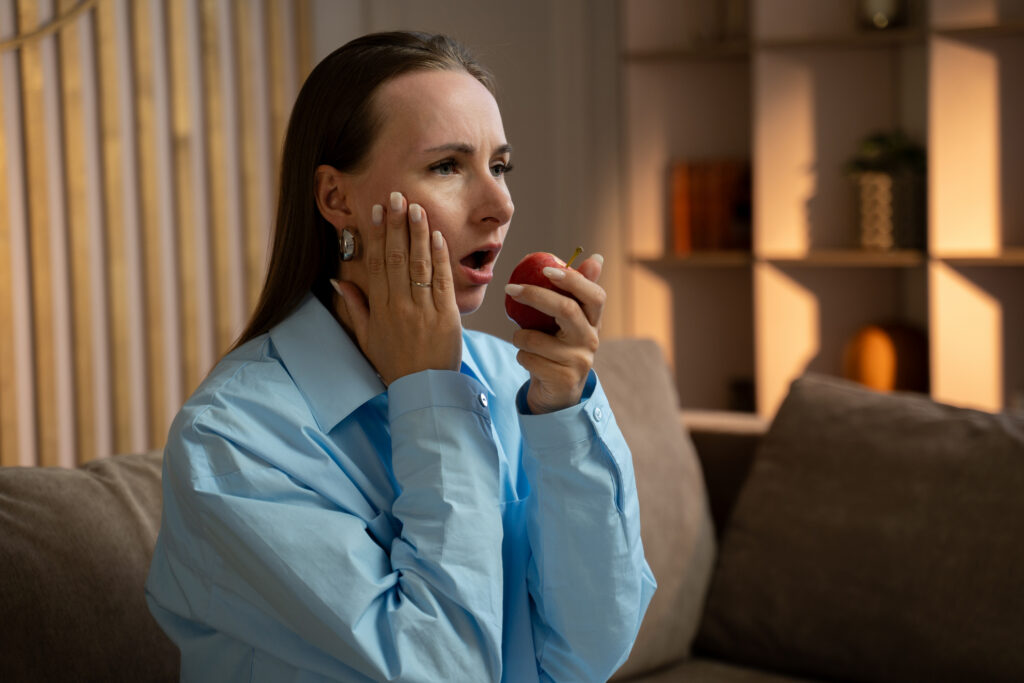
If your jaw clicks, pops, or shifts when you chew or yawn, you’re not alone. Jaw joint noises are common, and in many cases, they aren’t dangerous. However, when clicking is paired with pain, stiffness, or headaches, it may signal a temporomandibular joint (TMJ) disorder that deserves evaluation.
At California Dental Group, we assess jaw symptoms carefully because not all clicking requires treatment — but some cases benefit significantly from early intervention.
What Is the TMJ?
The temporomandibular joints connect your lower jaw to your skull, located just in front of each ear. These joints allow you to open and close your mouth, chew, speak, and yawn. A small cartilage disc inside each joint helps the jaw move smoothly.
When that disc shifts out of position or the joint becomes inflamed, clicking or popping sounds can occur.
Why Does the Jaw Click?
A clicking sound often happens when the cartilage disc moves slightly out of alignment and then slips back into place as you open or close your mouth. This is called “disc displacement with reduction.”
In many cases, clicking alone — without pain or limited movement — is not a serious problem.
However, jaw noises can also result from:
- Teeth grinding or clenching
- Muscle tension in the jaw
- Bite misalignment
- Arthritis within the joint
- Stress-related jaw tightening
Understanding the cause helps determine whether treatment is necessary.
When Is Jaw Clicking Harmless?
Occasional clicking without discomfort, locking, or limited movement is often considered benign. Many people live with mild joint noise for years without complications.
If the jaw:
- Opens fully
- Does not lock
- Does not cause pain
- Does not interfere with eating
then monitoring may be all that’s required.
When Should You Seek Evaluation?
Jaw clicking becomes more concerning when it’s accompanied by other symptoms, such as:
- Pain in front of the ear
- Frequent headaches
- Facial muscle soreness
- Jaw stiffness in the morning
- Difficulty opening or closing the mouth
- A jaw that locks open or closed
These symptoms may indicate inflammation, muscle strain, or worsening disc displacement.
How Dentists Evaluate TMJ Symptoms
During an exam at California Dental Group, your dentist may:
- Listen for joint sounds
- Measure jaw opening range
- Palpate jaw muscles for tenderness
- Assess your bite alignment
- Look for signs of grinding, such as worn teeth
In some cases, imaging may be recommended if symptoms are severe or persistent.
Treatment Options for TMJ Issues
Treatment depends on the severity of symptoms.
For mild muscle-related discomfort, conservative options may include:
- Custom night guards to reduce grinding
- Jaw exercises
- Anti-inflammatory strategies
- Stress reduction techniques
If clenching or grinding is the primary cause, protecting the teeth and reducing muscle strain often improves symptoms significantly.
In more advanced cases involving joint degeneration or severe disc displacement, referral to a specialist may be appropriate.
Surgery is rarely needed and is typically considered only after conservative approaches have been tried.
Can TMJ Symptoms Resolve on Their Own?
In many mild cases, yes. Reducing stress, avoiding hard or chewy foods, and limiting wide jaw movements can help calm irritated joints.
However, ignoring persistent pain may allow inflammation to worsen. Early evaluation helps prevent chronic discomfort.
Protecting Your Jaw Health
Simple habits can reduce strain on your TMJ:
- Avoid chewing ice or gum excessively
- Limit wide yawning when possible
- Manage stress-related clenching
- Wear a night guard if recommended
If your jaw clicking is painful, worsening, or interfering with daily life, schedule an evaluation at California Dental Group. Call 800-407-0161 to book an appointment and determine whether your joint noise is harmless — or something that needs attention.
