
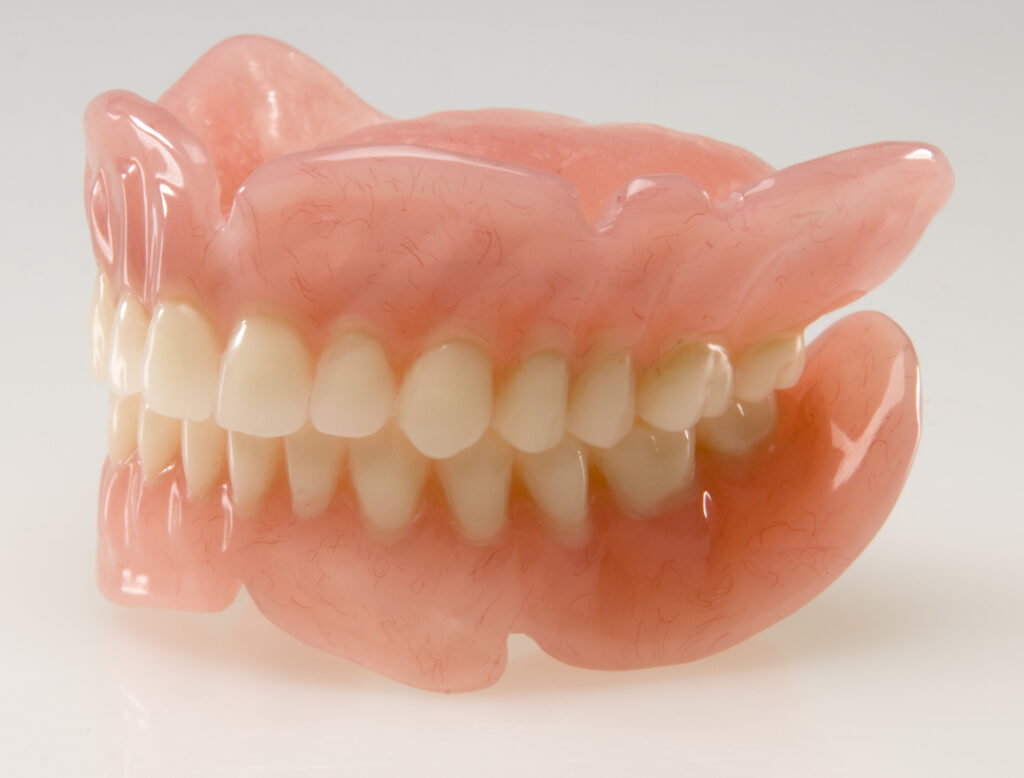
A denture that once fit perfectly can start to feel loose or irritating over time. This is a common experience for Whittier patients, and it’s not a sign that something has gone wrong with the denture itself — it’s usually a sign that the mouth has changed. A reline is often all that’s needed to restore comfort and stability.
Why Dentures Stop Fitting Properly
The gums and jawbone naturally reshape over months and years, especially after tooth loss. As this happens, the once-snug base of a denture no longer matches the contours of the mouth, leading to slipping, rubbing, or soreness. Relining adjusts the fit of the existing denture rather than requiring a full replacement.
- Gum and bone changes: Natural shifts over time alter denture fit
- Slipping or rocking: A loose denture can move during eating or speaking
- Irritation or sore spots: Ill-fitting dentures can rub against soft tissue
Soft Relines: Comfort for Sensitive Gums
A soft reline adds a cushioned, pliable layer to the underside of the denture base. This option is often recommended for patients with tender gums, recent extractions, or areas prone to irritation, since the softer material reduces pressure points.
- Gentle cushioning: Reduces discomfort for sensitive tissue
- Ideal for healing gums: Often used shortly after extractions
- Shorter lifespan: Typically needs replacement sooner than a hard reline
Looking to Improve Your Dental Health?
Get in touch with our office today to book your appointment!
800-407-0161
Hard Relines: A Longer-Lasting Fit
A hard reline reshapes the denture base using a firmer, more durable material. While it may take a short adjustment period, this option provides a more stable and long-lasting fit, making it a good choice for patients whose gums have changed significantly.
- Durable material: Built to withstand daily wear for longer
- Improved stability: Offers a more secure hold during chewing and speaking
- Fewer follow-up adjustments: Tends to hold its fit for an extended period
Which Reline Is Right for You?
The right choice depends on gum sensitivity, how much the mouth has changed, and how the denture currently fits. During an evaluation, the dentist will check the fit, examine the gums, and recommend whether a soft or hard reline — or another adjustment — best addresses the issue.
- Fit evaluation: The dentist checks how the denture currently sits
- Gum examination: Sensitive or irritated areas are identified
- Reline recommendation: A soft or hard reline is selected based on need
Signs It’s Time for a Reline
Waiting too long to address a loose denture can lead to ongoing irritation or difficulty eating. Patients in Whittier should watch for a few common warning signs that a reline may be needed.
- Noticeable slipping: The denture moves when talking or chewing
- Sore spots: Persistent rubbing or pressure points on the gums
- Difficulty chewing: Food doesn’t break down as easily as it used to
Schedule Your Denture Reline Appointment
A loose or uncomfortable denture doesn’t have to be permanent. Contact California Dental Group at 800-407-0161 to schedule an appointment and find out whether a soft or hard reline can restore the comfortable, secure fit you deserve.
