
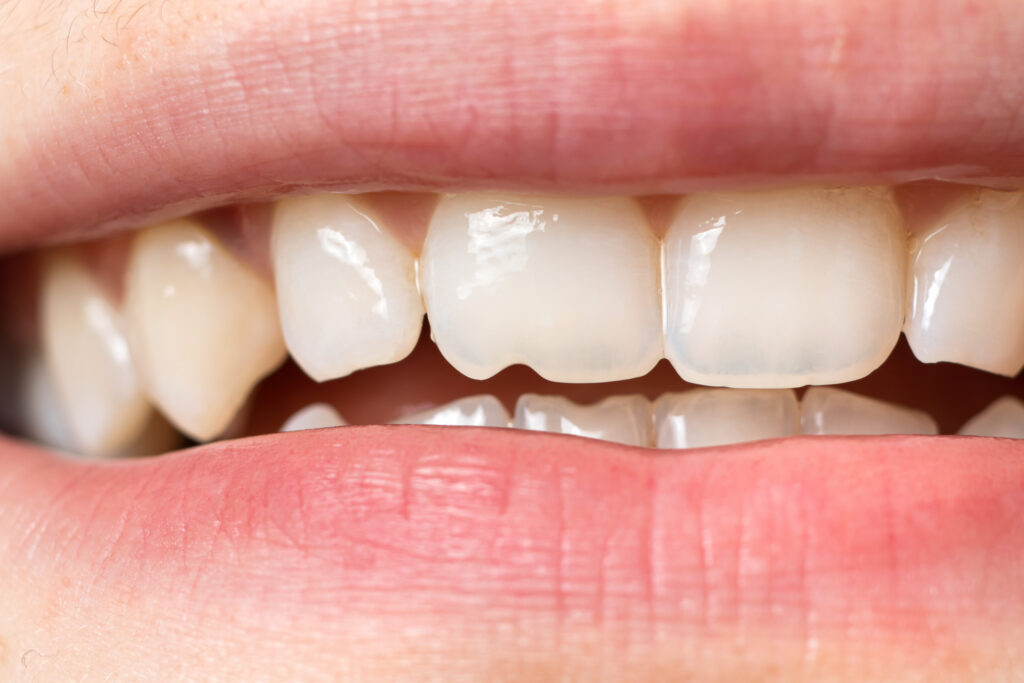
Most people think of cavities as dark holes in teeth. In reality, tooth decay doesn’t start that way. It often begins as a faint, chalky white spot on the enamel — a stage that is easy to miss but important to catch early.
At California Dental Group, we look closely for these early warning signs because the “white spot stage” is often reversible. Acting at this point can prevent the need for fillings later.
What Are White Spots on Teeth?
White spots are areas where enamel has started to lose minerals. This process is called demineralization. When acids from plaque bacteria sit on the tooth surface for extended periods, they pull minerals like calcium and phosphate out of the enamel.
The result is a porous area that appears chalky or opaque compared to the surrounding tooth.
These spots often appear:
- Along the gumline
- Around orthodontic brackets
- On smooth front tooth surfaces
- In areas that are difficult to brush thoroughly
While they may seem cosmetic at first, they are actually the earliest visible stage of tooth decay.
What Causes Enamel Demineralization?
White spot lesions develop when the balance between acid exposure and mineral repair is disrupted.
Common causes include:
Plaque Buildup
When plaque remains on teeth, bacteria feed on sugars and produce acid. Repeated acid attacks gradually weaken enamel.
Frequent Snacking or Sugary Drinks
Sipping soda, sports drinks, or sweetened coffee throughout the day constantly exposes enamel to acid. Even healthy options like fruit juices can contribute.
Orthodontic Tlreatment
Braces create small spaces where plaque can accumulate. Without careful cleaning, white spots may form around brackets.
Dry Mouth
Saliva plays a crucial role in neutralizing acid and replenishing minerals. Reduced saliva flow increases the risk of demineralization.
Poor Oral Hygiene
Inconsistent brushing and flossing allow plaque to remain on teeth longer, increasing acid exposure.
Can White Spots Be Reversed?
The encouraging news is that early enamel breakdown can sometimes be reversed before it becomes a cavity.
When the enamel surface is still intact, remineralization is possible. This involves restoring lost minerals to strengthen the enamel.
Treatment options may include:
- Professional fluoride treatments
- Prescription-strength fluoride toothpaste
- Improved brushing and flossing techniques
- Dietary adjustments to reduce acid exposure
Fluoride helps reinforce enamel by making it more resistant to future acid attacks.
However, once the enamel surface collapses and a cavity forms, a filling becomes necessary. That’s why identifying white spots early matters.
Are White Spots Always Decay?
Not always. Some white spots may be caused by:
- Fluorosis (overexposure to fluoride during childhood)
- Developmental enamel differences
- Post-orthodontic staining
A dental exam helps determine whether the area is active decay, an old inactive lesion, or simply cosmetic.
How Dentists Evaluate White Spots
During your visit at California Dental Group, your dentist may:
- Examine the texture of the enamel
- Assess whether the area feels soft or intact
- Use digital imaging to monitor changes
- Evaluate overall cavity risk
Active white spot lesions often appear dull and chalky, while inactive ones may look smoother and shinier.
Preventing Future Enamel Breakdown
Prevention focuses on minimizing acid exposure and strengthening enamel.
Helpful habits include:
- Brushing twice daily with fluoride toothpaste
- Flossing daily
- Limiting frequent snacking
- Rinsing with water after acidic drinks
- Attending regular dental cleanings
Small changes in routine can significantly reduce the likelihood of progression.
Why Early Detection Makes a Difference
The white spot stage represents an opportunity. When caught early, decay can often be halted without drilling or fillings. Ignoring these early signs, however, allows the process to continue beneath the surface.
If you’ve noticed chalky patches on your teeth — or if it’s been a while since your last exam — schedule an appointment with California Dental Group at 800-407-0161. Identifying early enamel changes now can help protect your smile for years to come.
