
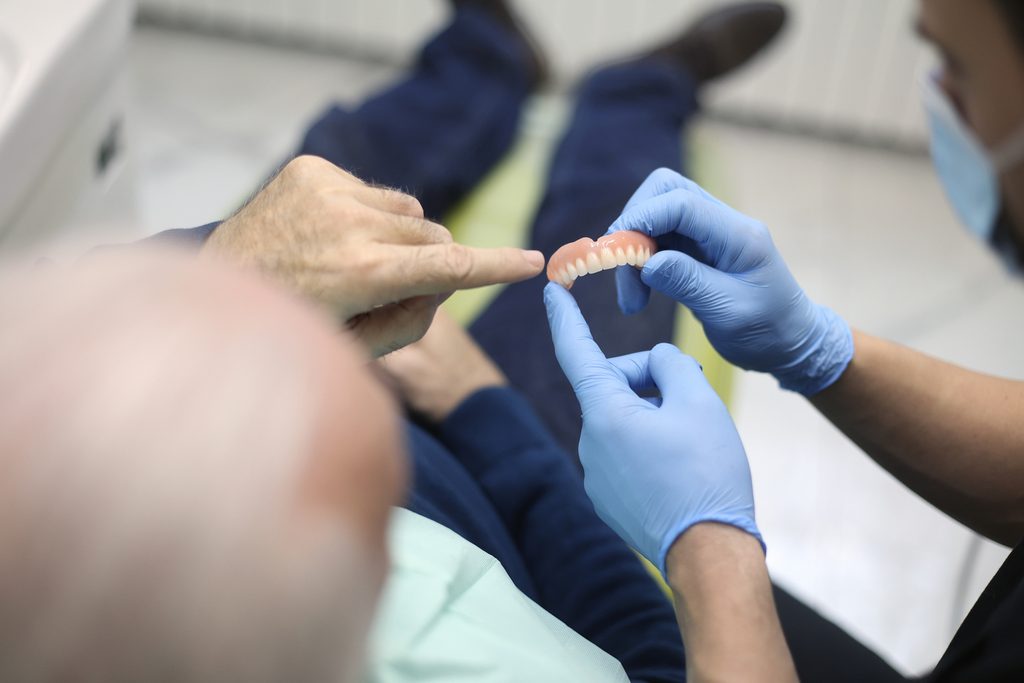
Dentures should let you eat, speak, and smile comfortably. When a sore spot develops under them, though, every bite can become something you brace for. Many patients in Bellflower assume a little soreness is just part of wearing dentures, and some try to tough it out for weeks. At California Dental Group, we want patients to know that ongoing pain is a sign something needs attention, and that the fix is often simple.
What Causes Sore Spots Under Dentures?
Denture sores usually come from pressure or friction in one area of the gums. Common causes include:
- New dentures settling in: Fresh dentures often have small pressure points that need fine-tuning during the first few weeks.
- Changes in your gums and jawbone: After teeth are lost, the bone underneath slowly shrinks. A denture that once fit well can become loose and start rubbing.
- Rough or high spots: A small rough edge or an area that presses too hard can irritate tissue every time you bite.
- Trapped food particles: Seeds and small bits of food that slip under the denture can scrape the gums.
- Wearing dentures around the clock: Your gums need time to rest and recover. Sleeping in dentures can lead to irritation and infection.
- Inadequate cleaning: Plaque and yeast on a denture can cause red, inflamed tissue, a condition sometimes called denture stomatitis.
- A cracked or damaged denture: Even a small crack can change the fit or create a sharp edge.
Safe Ways to Find Relief at Home
While you wait for your appointment, a few simple steps can ease discomfort:
- Take your dentures out for a few hours when you can to let the area rest.
- Rinse with warm salt water a few times a day to soothe the tissue and keep it clean.
- Stick to soft foods and cut food into small pieces to reduce pressure on sore areas.
- Clean your dentures thoroughly every day and soak them overnight as directed.
One thing to avoid is trying to adjust the denture yourself. Filing, sanding, or bending a denture at home can ruin the fit and lead to costly repairs. Piling on extra adhesive to stop the rubbing can also hide a fit problem that needs to be fixed.
When Bellflower Patients Should Schedule an Adjustment
Call your dentist if you notice:
- A sore spot that hasn’t improved after a few days
- Pain that makes it hard to eat or wear your dentures
- Dentures that feel loose, rock, or click when you talk
- Red, swollen, or white patches on your gums or the roof of your mouth
- A sore that hasn’t healed within two weeks
A sore that won’t heal should always be examined, even if it doesn’t hurt much. Routine denture visits include a check of your gums and an oral cancer screening, which is why our denture exams and maintenance appointments matter even when everything feels fine.
How Your Dentist Fixes the Problem
The solution depends on the cause. For pressure points on new dentures, your dentist can adjust specific areas of the denture base in just a few minutes. If your gums have changed shape and your denture has become loose, a denture reline can reshape the fitting surface so it sits snugly again. Soft relines add a cushioned layer for patients with sensitive gums, while hard relines offer a more durable fit. If irritation is caused by infection, your dentist will treat that and review your cleaning routine with you.
Comfortable Dentures Are Worth It
You shouldn’t have to put up with sore gums to wear your dentures. A quick adjustment can make a big difference in how you eat, talk, and feel every day. If your dentures are causing pain or irritation, call California Dental Group at 800-407-0161 to schedule a denture check for patients in Bellflower.
