
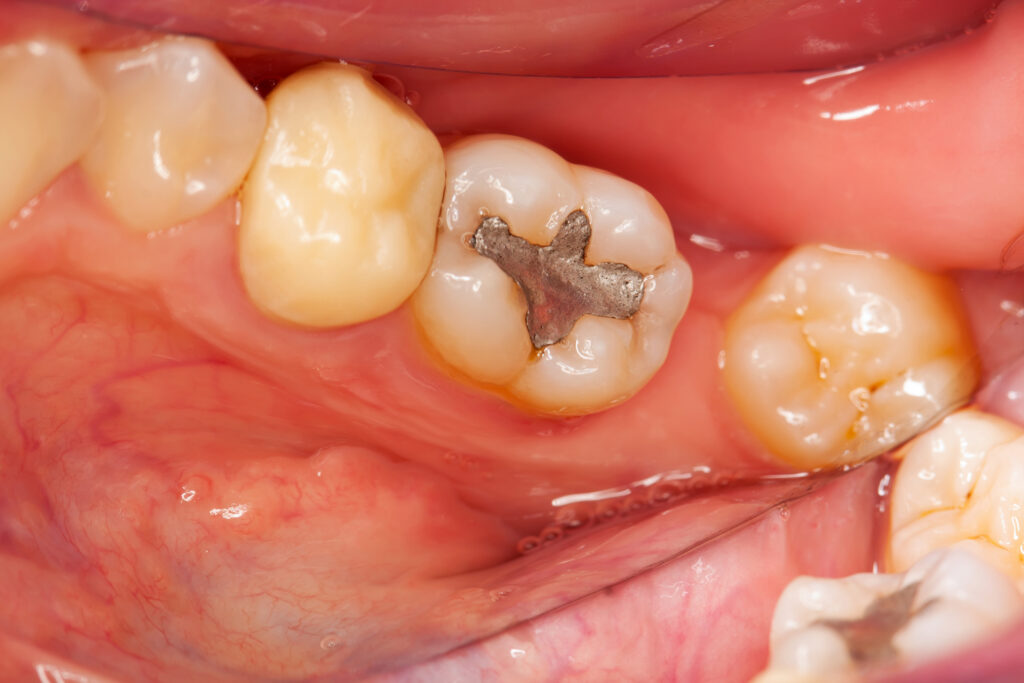
If you have older dental work, there’s a good chance some of those restorations are amalgam — the silver-colored metal fillings that were the standard for decades. They’re durable, and many of them are still doing their job. But patients frequently ask whether it’s time to replace them, and the answer depends on more than just aesthetics. For Orange patients with older fillings, here’s a straightforward look at when replacement makes sense, what the alternatives are, and what to expect from the process. At California Dental Group, we help patients make informed decisions about their existing dental work without unnecessary treatment.
What Amalgam Fillings Are Made Of
Amalgam fillings are composed of a mixture of metals including silver, tin, copper, and mercury. The mercury content has raised questions over the years, and while dental and public health organizations have consistently found amalgam fillings to be safe for most patients, some individuals prefer to move away from them for peace of mind. More practically, amalgam doesn’t bond chemically to tooth structure the way composite resin does — it’s held in place mechanically, which requires removing more natural tooth material during placement.
When Replacement Is Actually Warranted
Not every old filling needs to come out. If an amalgam filling is intact, well-sealed, and showing no signs of decay or damage underneath, replacing it simply for cosmetic reasons isn’t necessarily the best use of your dental health budget — and every time a filling is replaced, some additional tooth structure is lost in the process.
Replacement becomes a reasonable conversation when a filling is cracked, worn down, or has developed gaps at the margins where bacteria can seep in and cause decay beneath the restoration. X-rays are essential here — many of the issues that develop under old fillings aren’t visible to the naked eye. During routine exams at California Dental Group, your dentist will monitor the condition of existing restorations and flag any that show signs of breakdown.
The Case for Tooth-Colored Composite Fillings
When a filling does need to be replaced, tooth-colored composite resin is the most common modern alternative. Composite fillings bond directly to tooth structure, which means less removal of healthy tooth material is required during placement. They’re matched to the natural shade of your teeth, making them essentially invisible, and they don’t contain metal or mercury.
For Orange patients who are replacing older fillings for cosmetic reasons in addition to functional ones, composite offers a seamless result that amalgam simply can’t match.
What the Replacement Process Looks Like
Replacing an amalgam filling is a straightforward procedure. The old filling is removed, the area is cleaned and checked for any decay that may have developed underneath, and the new composite material is placed in layers and hardened with a curing light. The tooth is then shaped and polished for a comfortable bite and natural appearance.
Depending on the size and location of the filling, the appointment typically takes less than an hour. Local anesthesia keeps the process comfortable, and most patients return to normal activities the same day.
How to Know Where Your Fillings Stand
The best way to assess the condition of older dental work is through a comprehensive exam and updated X-rays. Your dentist can evaluate each restoration individually and give you an honest picture of which ones are performing well and which may be approaching the end of their useful life.
Schedule Your Exam at California Dental Group
If you have older fillings and want to know where they stand, the team at California Dental Group is here to help Orange patients get a clear, honest assessment of their dental work. Call 800-407-0161 to schedule your appointment today.
