
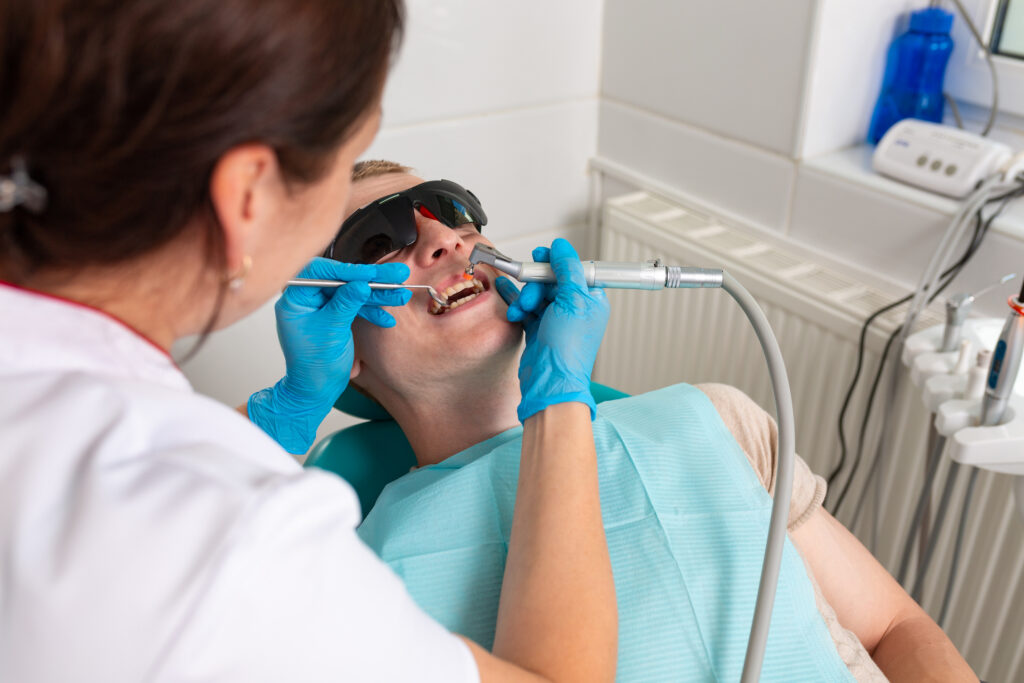
When most Glendale patients hear the word “sealants,” they assume it’s something for kids. And while dental sealants are widely recommended for children, they’re also a practical and effective preventive option for adults — particularly those with deep grooves in their back teeth who want to stay ahead of cavities before they start.
What Dental Sealants Actually Are
A dental sealant is a thin, protective coating applied to the chewing surfaces of the back teeth — the molars and premolars. These surfaces are full of small pits and grooves that trap food particles and bacteria, making them difficult to clean thoroughly even with careful brushing. Over time, that trapped debris leads to decay.
The sealant material flows into these grooves and hardens, creating a smooth surface that’s much easier to clean and far more resistant to the bacteria that cause cavities. It’s a simple, painless procedure that typically takes only a few minutes per tooth and requires no drilling or removal of tooth structure.
Why Adults Benefit Too
The logic behind sealants doesn’t change once a patient turns 18. If your molars have deep grooves and you’ve been cavity-prone, or if you simply want to protect teeth that are still healthy, sealants offer a meaningful layer of defense. They’re particularly worth considering for:
- Adults who have never had a cavity in a particular tooth and want to keep it that way
- Patients whose back teeth show early signs of enamel wear in the grooves
- Anyone whose brushing habits leave the chewing surfaces less thoroughly cleaned than ideal
- Patients with a high sugar diet or a history of frequent decay
Sealants are also a cost-effective preventive measure. The investment is considerably smaller than the cost of treating a cavity once it develops.
The Application Process
Getting sealants is straightforward. The tooth is cleaned and dried, and a mild etching solution is briefly applied to help the sealant bond properly. The sealant material is then painted onto the tooth surface, where it flows into the grooves. A curing light hardens it within seconds. That’s it — no numbing, no drilling, no recovery time.
The entire process for multiple teeth is typically completed within a single visit to California Dental Group, and patients can eat and drink normally right afterward.
How Long Do Sealants Last?
With normal use, dental sealants can last several years before they need to be checked or reapplied. Your dentist will evaluate the condition of your sealants during routine exams. If a sealant has chipped or worn down in areas, it can be touched up or reapplied to maintain its protective effect. They’re not permanent, but they offer consistent protection for as long as they remain intact.
Sealants as Part of a Preventive Strategy in Glendale
Sealants work best as part of a broader approach to preventive care. Twice-daily brushing, daily flossing, limiting sugary foods and drinks, and keeping up with professional cleanings all contribute to a healthy smile. Sealants simply close off one of the most vulnerable areas — the grooves of the back teeth — from the bacteria that lead to decay.
If you haven’t had sealants and you’re looking for a simple way to reduce your cavity risk, it’s worth asking your dentist whether your molars are good candidates.
Call California Dental Group at 800-407-0161 to schedule your preventive care visit and find out whether dental sealants are right for you.
