
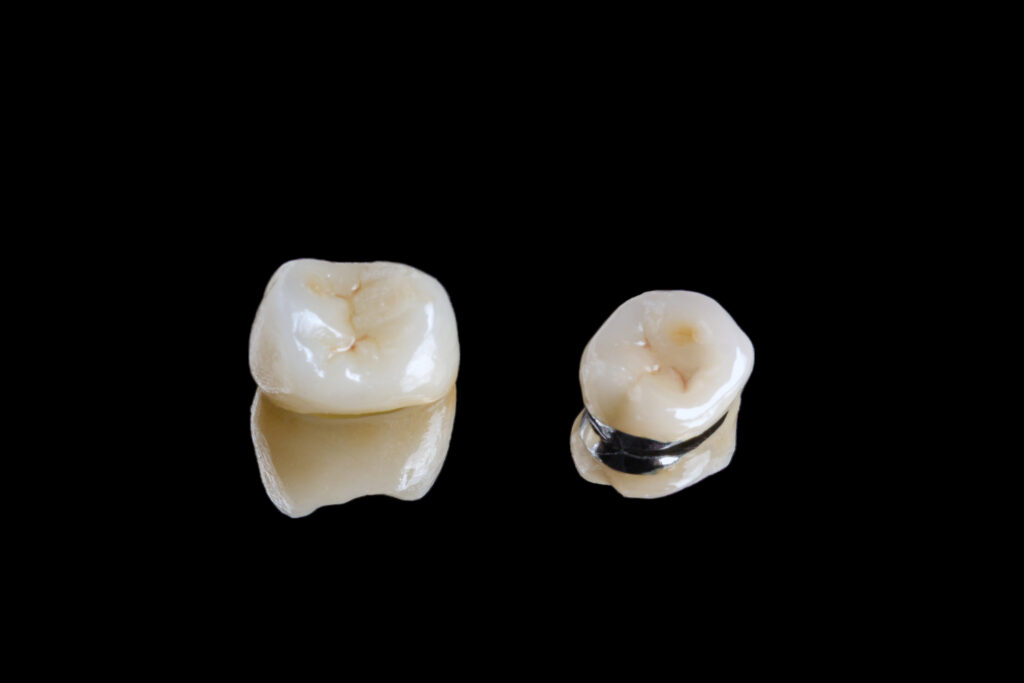
When a damaged tooth needs a crown, one of the first decisions Rialto patients face is which material is the right fit. Each option offers a different balance of strength, appearance, and durability, and the best choice often depends on where the tooth is located and how it’s used.
Porcelain or Ceramic Crowns
Porcelain and ceramic crowns are prized for how closely they match the natural color and translucency of real teeth. This makes them a popular choice for front teeth, where appearance is often the top priority.
- Natural appearance: Closely mimics the look of surrounding teeth
- Ideal for visible teeth: Best suited for front teeth where esthetics matter most
- Metal-free option: A good fit for patients with metal sensitivities
Metal Crowns
Metal crowns, typically made from gold or other durable alloys, are known for their exceptional strength and longevity. While their appearance makes them less common for front teeth, they remain a reliable choice for molars that endure heavy chewing forces.
- Superior durability: Withstands significant biting and chewing pressure
- Long-lasting: Resistant to wear even under repeated use
- Best for back teeth: Less visible placement makes appearance less of a concern
Porcelain-Fused-to-Metal Crowns
For patients who want a balance of strength and natural appearance, porcelain-fused-to-metal crowns combine a metal substructure with a porcelain outer layer. This offers many of the esthetic benefits of porcelain with added structural support from the metal base.
- Combined strength and looks: Metal core adds durability, porcelain adds a natural finish
- Versatile placement: Suitable for both front and back teeth
- Longer-lasting than porcelain alone: The metal base adds extra resistance to fracture
Factors That Influence the Right Choice
Selecting a crown material isn’t a one-size-fits-all decision. The dentist considers several factors specific to each patient and tooth before making a recommendation.
- Tooth location: Front teeth often prioritize appearance, back teeth prioritize strength
- Bite force: Patients who grind their teeth may need a more durable material
- Aesthetic goals: Some patients prioritize a seamless, natural look above all else
What to Expect During Crown Placement
Regardless of material, the process for placing a crown generally follows the same steps. The tooth is prepared, an impression is taken, and a temporary crown protects the tooth while the permanent restoration is crafted.
- Tooth preparation: A portion of the tooth structure is reshaped to fit the crown
- Impressions taken: These guide the creation of a custom-fitted crown
- Permanent placement: The finished crown is bonded securely in place at a follow-up visit
Caring for Your Crown
No matter which material is chosen, proper care extends the life of a crown significantly. Routine brushing, flossing, and checkups help protect both the crown and the natural tooth structure underneath it.
- Consistent oral hygiene: Brushing and flossing protect the crown margins
- Avoid excessive force: Steer clear of chewing on hard objects like ice
- Regular checkups: Routine visits catch wear or damage early
Schedule Your Crown Consultation
If you have a damaged or weakened tooth, understanding your crown material options can help you make a confident decision. Contact California Dental Group at 800-407-0161 to schedule an appointment and find the right solution for your smile.
