
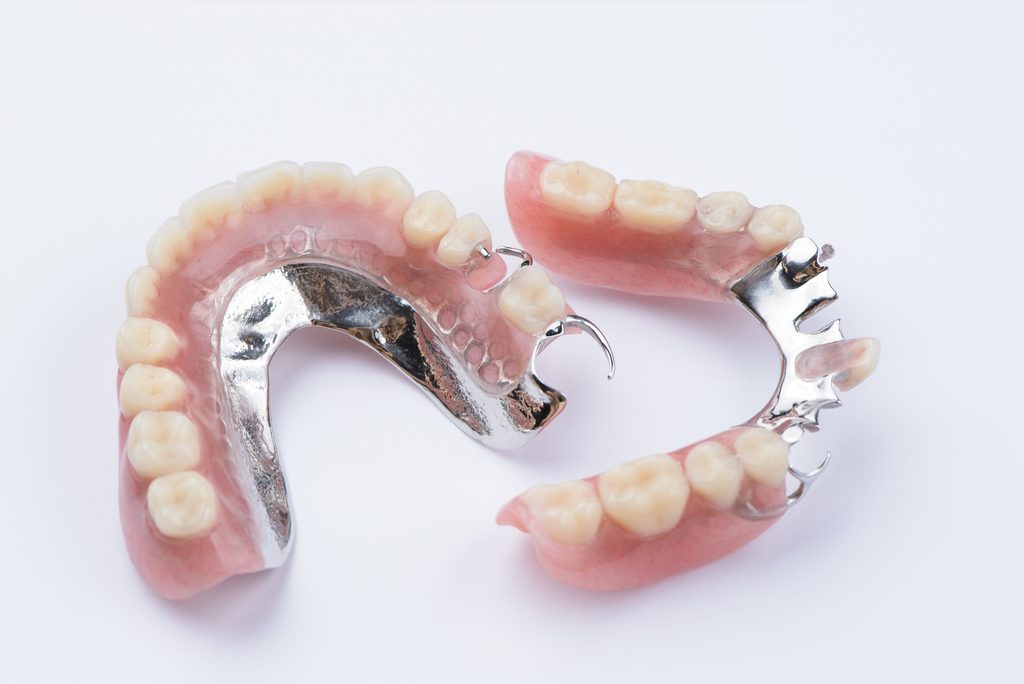
If you’re missing a few teeth but still have healthy natural teeth, a partial denture can fill the gaps, restore your bite, and keep your remaining teeth from drifting out of place. Many patients in Bell Gardens are surprised to learn that partials come in different styles. The two you’ll hear about most are metal-frame partials and flexible partials. At California Dental Group, we help patients compare these options based on their mouths, budgets, and daily routines.
How Partial Dentures Work
A partial denture holds replacement teeth on a gum-colored base. It stays in place by gripping nearby natural teeth with small clasps. Because it’s removable, you can take it out for cleaning and sleep. The main difference between partial types is the material used for the framework and clasps, and that choice affects how the partial feels, looks, and lasts. You can read more about the basics on our partial dentures page.
Metal-Frame Partial Dentures
A metal-frame partial is built on a thin, strong metal framework. The replacement teeth and gum-colored base are attached to it, and metal clasps hold onto your natural teeth.
Benefits include:
- Strength and stability: The rigid frame spreads chewing forces evenly, which helps the partial stay steady when you eat.
- A thinner design: Metal is strong enough to be made very thin, so the partial often feels less bulky.
- Long-term durability: With good care, metal-frame partials can last many years.
- Easier to adjust: If your mouth changes or you lose another tooth, a metal partial can often be relined, repaired, or have a tooth added.
The main drawback is appearance. Depending on where your missing teeth are, a metal clasp may show when you smile.
Flexible Partial Dentures
Flexible partials are made from a thin, bendable plastic material. Instead of metal clasps, they use gum-colored clasps that blend in with your natural tissue.
Benefits include:
- A more natural look: Because there’s no visible metal, flexible partials can be a good choice when missing teeth are near the front of the mouth.
- Comfort: The material is lightweight and slightly flexible, which many patients find comfortable from the start.
- No metal: They can be a good option for patients with sensitivities to certain metals.
There are trade-offs. Flexible partials can be harder to reline or repair, and adding a tooth later may not be possible. They may also move more during chewing than a rigid metal frame.
Which Option Fits Bell Gardens Patients Best?
The right choice depends on your situation. Your dentist will consider:
- How many teeth are missing and where: Front gaps often favor appearance, while larger gaps or back teeth may need more support.
- The health of your remaining teeth: The teeth that anchor the partial need to be strong enough to support it.
- Your long-term plans: If you may lose more teeth later, a partial that can be modified may save you from starting over.
- Comfort and lifestyle: How you eat, speak, and care for your partial all play a role.
Caring for Your Partial, Whatever the Style
Both types need daily cleaning. Remove your partial and brush it gently with a soft brush and non-abrasive cleaner, and avoid regular toothpaste, which can scratch the surface. Keep it moist when you’re not wearing it, and clean the natural teeth that hold the clasps carefully, since plaque around them can lead to decay. Our denture care page has more tips.
Find Your Fit With California Dental Group
A well-made partial should feel secure, look natural, and let you eat comfortably. If you’re weighing your options, our team can examine your mouth and walk you through the choices that make sense for you. Bell Gardens patients can call 800-407-0161 to schedule a partial denture consultation with California Dental Group.
