
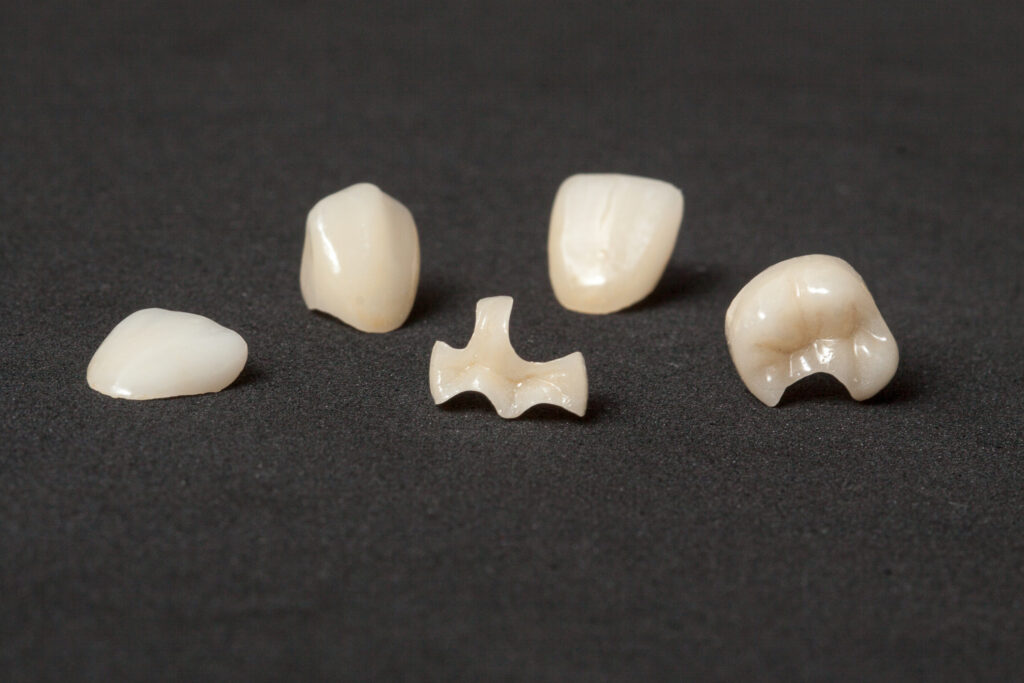
When a tooth is damaged by decay or injury, the fix isn’t always as simple as a filling or as involved as a crown. Sometimes the right answer lies in between. For Ontario patients, inlays and onlays offer a conservative, durable solution for teeth that need more than a filling can provide but don’t require a full crown. These custom-made restorations preserve more of your natural tooth while restoring its strength and appearance. The team at California Dental Group uses them to give patients a long-lasting result without removing more tooth structure than necessary.
What Are Inlays and Onlays?
Inlays and onlays are indirect restorations, meaning they’re custom-made outside your mouth and then bonded to the tooth. They’re typically used when a tooth is too damaged for a standard filling but not so damaged that it needs a full crown. The difference between the two comes down to how much of the tooth they cover:
- Inlays: These fit into the grooves of your tooth, used when the damage doesn’t extend to the cusps — the raised points of the tooth.
- Onlays: These cover a larger area, extending over one or more of the cusps, making them suitable for more extensive damage.
Think of them as a precise, tailored repair that fills the space between a filling and a crown.
Why Ontario Patients Choose This Option
Inlays and onlays have become a popular choice for good reason. Their advantages include:
- Conservative treatment: They preserve more of your natural tooth structure compared to a full crown.
- Durability: Made from strong materials like porcelain or composite resin, they’re built to withstand the forces of chewing.
- Natural appearance: They’re custom-made to match the color of your natural teeth for a seamless result.
For patients who want to protect a damaged tooth without sacrificing more of it than needed, this middle-ground approach is often ideal.
When an Inlay or Onlay Makes Sense
The decision usually comes down to how much of the tooth is affected. A small cavity is easily handled by a filling, while a tooth that’s severely damaged or weakened may need the full coverage of a crown. When the damage falls somewhere in the middle — too big for a reliable filling but not extensive enough to justify a crown — an inlay or onlay is often the best fit. Your dentist will examine the tooth and recommend the option that offers the right balance of strength and preservation.
What to Expect During the Process
Getting an inlay or onlay at California Dental Group typically involves two visits. During the first, your dentist prepares the tooth by removing the decayed or damaged portion, then takes an impression that’s sent to a dental lab where your custom restoration is created. At the second visit, the finished inlay or onlay is bonded to the tooth with a strong adhesive, then shaped and polished for a natural, comfortable fit. The result is a restoration that blends in and holds up well over time.
Caring for Your Restoration
Inlays and onlays require the same care as your natural teeth. Brush and floss regularly, and keep up with routine check-ups so your dentist can make sure the restoration stays in good condition. With proper care, these restorations can protect and strengthen your tooth for many years.
Schedule Your Appointment Today
If you have a damaged tooth and want a durable, tooth-preserving solution, inlays and onlays may be exactly what you need. The team at California Dental Group can evaluate your tooth and recommend the best approach. Contact us at 800-407-0161 to schedule your appointment today.
