
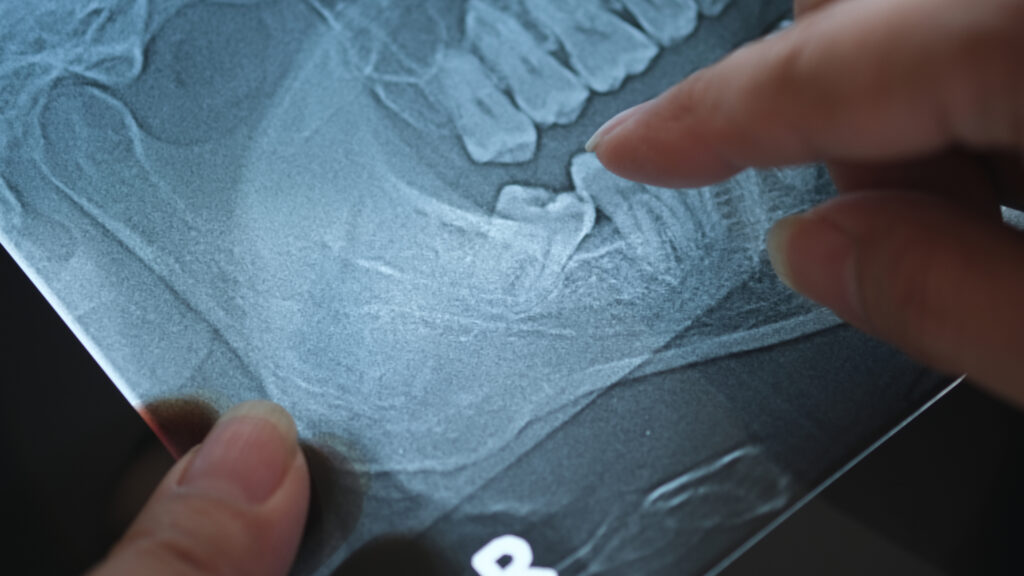
Wisdom teeth typically make their appearance in the late teens or early twenties, and for many Rancho Cucamonga patients, they arrive without enough room to fit properly. Understanding the difference between a wisdom tooth that’s simply crowded and one that’s truly impacted can help patients know what to expect and when treatment is necessary.
What Does It Mean for a Wisdom Tooth to Be Impacted?
An impacted wisdom tooth is one that doesn’t have enough space to emerge fully or grow in at a normal angle. Instead of erupting straight up through the gum line, it may grow sideways, get trapped beneath the gum, or push against neighboring teeth. This differs from simple crowding, where a wisdom tooth emerges but has limited space to settle.
- Partial eruption: The tooth breaks through the gum only partway
- Angled growth: The tooth grows sideways or tilted against other teeth
- Full impaction: The tooth remains completely trapped beneath the gum
Signs You May Be Dealing with an Impacted Wisdom Tooth
Not every wisdom tooth causes noticeable problems right away, but certain symptoms are worth paying attention to. Catching these signs early can prevent more serious complications down the road.
- Pain or swelling: Discomfort near the back of the jaw, especially when chewing
- Gum irritation: Redness or tenderness around the emerging tooth
- Jaw stiffness: Difficulty fully opening the mouth
Looking to Improve Your Dental Health?
Get in touch with our office today to book your appointment!
800-407-0161
Why Impacted Wisdom Teeth Need Attention
Left untreated, an impacted wisdom tooth can lead to infection, damage to nearby teeth, or the formation of cysts around the trapped tooth. Impacted teeth are also more difficult to clean properly, which increases the risk of decay and gum disease in that area of the mouth.
- Infection risk: Partially erupted teeth trap bacteria and food debris
- Damage to neighboring teeth: Pressure from an impacted tooth can affect adjacent roots
- Cyst formation: Fluid-filled sacs can develop around a trapped tooth over time
When Wisdom Teeth Don’t Need to Come Out
Not every wisdom tooth requires extraction. Some erupt fully, align properly with the bite, and can be kept clean with normal brushing and flossing. Regular exams and X-rays help determine whether a wisdom tooth is developing safely or heading toward a problem.
- Full eruption: The tooth has emerged completely and sits in proper alignment
- Easy access for cleaning: The tooth can be brushed and flossed effectively
- No pressure on neighboring teeth: The tooth isn’t crowding or shifting other teeth
The Extraction Process
When removal is necessary, the procedure is performed under local anesthesia, with sedation options available for more complex cases. Most patients recover within a few days by following simple aftercare guidelines like eating soft foods and avoiding strenuous activity.
- Evaluation and imaging: X-rays determine the tooth’s position and impaction level
- Extraction: The tooth is carefully removed under anesthesia or sedation
- Recovery guidance: Instructions help manage swelling and promote healing
Schedule Your Wisdom Teeth Evaluation
If you’re experiencing jaw pain, swelling, or suspect your wisdom teeth may be impacted, don’t wait for symptoms to worsen. Contact California Dental Group at 800-407-0161 to schedule an appointment and find out whether your wisdom teeth need attention.
