
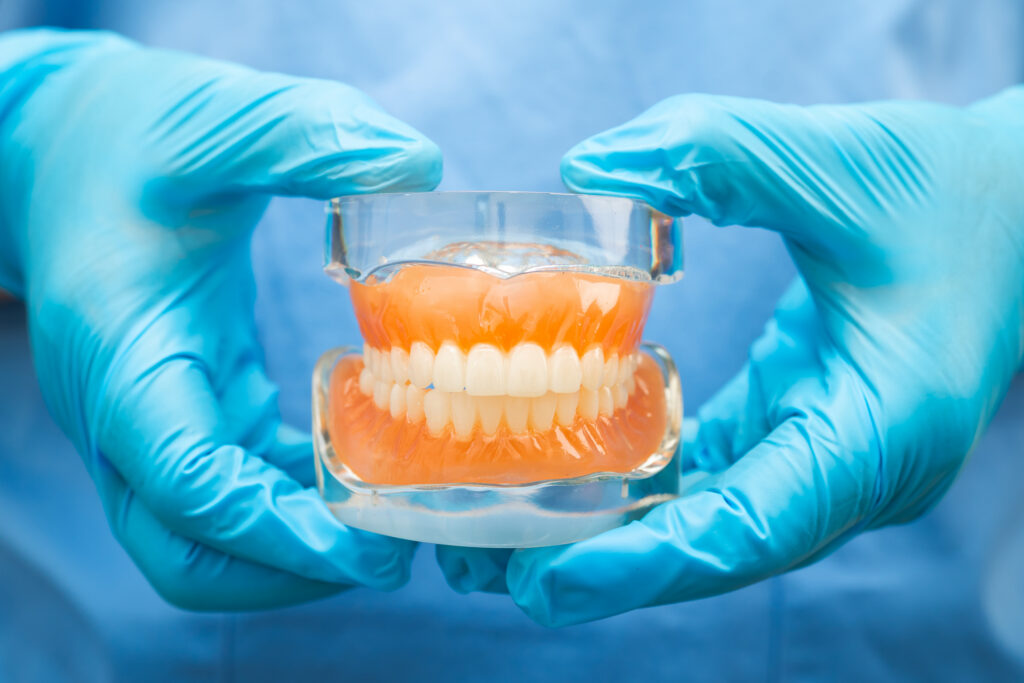
New dentures can restore your smile and your ability to enjoy meals, but eating with them is a skill that takes a little practice. The first few weeks are an adjustment period for your mouth, your cheek and tongue muscles, and your confidence. Many Torrance patients are surprised that chewing feels different at first, and that is completely normal. With the right approach, most people settle into eating comfortably with their dentures. At California Dental Group, we guide patients through this transition so they can get back to the foods they love.
Why Eating Feels Different at First
Natural teeth are anchored in the jawbone and give you direct feedback when you bite. Dentures rest on your gums, so your mouth has to learn a new way of chewing. During the first few weeks, you may notice:
- Extra saliva: Your mouth may produce more saliva as it gets used to the dentures. This usually settles on its own.
- Reduced taste or temperature sense: An upper denture covers part of the roof of the mouth, which can change how food feels at first.
- Sore spots: Pressure points on the gums are common early on and can often be relieved with a simple adjustment.
- Slight movement: Your cheeks and tongue need time to learn how to help hold the dentures in place.
Start With Soft Foods
The best way to begin is with foods that require little chewing. Soft options let your gums adjust and help you build control without frustration.
- First days: Yogurt, applesauce, mashed potatoes, soups, scrambled eggs, and smoothies.
- Next step: Pasta, cooked vegetables, flaky fish, soft rice, oatmeal, and tender chicken cut into small pieces.
- Later: Gradually add firmer foods as your comfort and confidence improve.
If your dentures were placed right after extractions, such as with immediate dentures, your gums are also healing, so staying with soft foods a bit longer is especially important.
Chewing Techniques That Help
A few simple habits make eating with dentures much easier:
- Cut food into small pieces: Smaller bites are easier to control and put less pressure on the dentures.
- Chew on both sides at the same time: Spreading food evenly across both sides of your mouth helps keep dentures stable.
- Bite with your side teeth: Biting into foods with your front teeth can tip dentures forward. Cut sandwiches and fruit instead of biting into them.
- Eat slowly: Taking your time helps your muscles learn and reduces sore spots.
Foods to Approach With Caution in Torrance
Some foods are harder to manage with dentures, especially early on:
- Sticky foods: Caramel, gum, and chewy candy can pull dentures loose.
- Hard foods: Nuts, hard candy, and ice can crack dentures or cause sore spots.
- Tough meats: Steak and jerky can be difficult to chew until you are more experienced.
- Small seeds: Seeds and small grains can slip under dentures and irritate the gums.
When to Call the Dentist
Adjusting to dentures should get easier each week. Contact your dentist if sore spots do not heal, the dentures feel loose or rock while you chew, or eating remains painful. Regular denture exams and maintenance visits help keep the fit comfortable, and a denture reline can improve stability as your gums change over time.
Enjoy Mealtime Again
With patience and a few smart habits, most patients find that eating with dentures becomes second nature. If you are adjusting to new dentures or need help with fit and comfort, the team at California Dental Group is here for you. Call 800-407-0161 today to schedule an appointment.
