
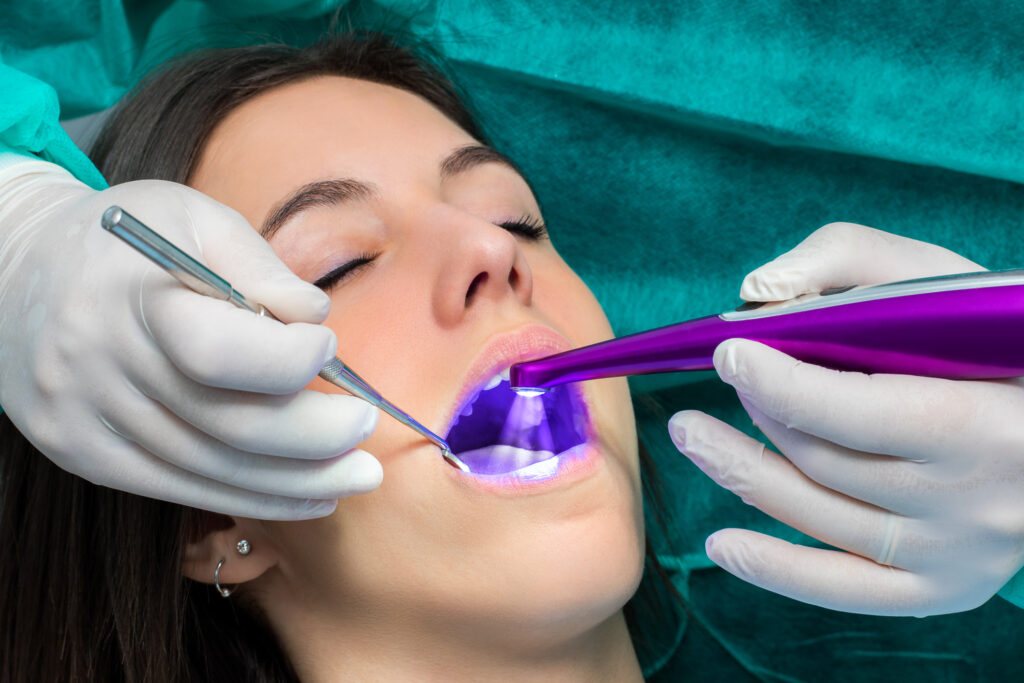
Dental sealants are often associated with children, but they can be just as beneficial for adults in the right situations. Sealants provide a protective barrier over vulnerable tooth surfaces, helping prevent cavities before they start. For adults with deep grooves, a history of decay, or hard-to-clean molars, sealants can be a smart preventive option—even later in life.
At California Dental Group, we recommend sealants based on individual risk, not age alone.
What Are Dental Sealants?
Dental sealants are thin, protective coatings applied to the chewing surfaces of teeth—most commonly molars and premolars. These teeth have pits and grooves that naturally trap food and bacteria, making them more prone to cavities.
The sealant flows into these grooves and hardens, creating a smooth surface that’s easier to clean and less likely to collect plaque. The procedure is quick, painless, and does not require drilling or removal of tooth structure.
Why Adults Can Benefit from Sealants
While sealants are frequently placed during childhood, adult teeth can remain at risk for decay well into adulthood. Sealants may be recommended for adults who:
- Have deep grooves or pits in molars
- Are cavity-prone or have a history of decay
- Have difficulty cleaning back teeth thoroughly
- Have early signs of enamel wear
- Want to take a preventive approach to oral health
Adults who have never had cavities on certain molars may be ideal candidates, as sealants work best on teeth that are not already decayed or restored.
Are Sealants Effective for Adults?
Yes. Sealants don’t lose effectiveness simply because of age. When properly placed and maintained, sealants can significantly reduce the risk of cavities on treated surfaces.
Sealants are especially helpful for preventing decay in areas where brushing and flossing may not fully reach. Even adults with good oral hygiene can benefit if tooth anatomy makes certain areas harder to keep clean.
How the Sealant Process Works
Getting dental sealants is a simple and comfortable process. During a sealant appointment at California Dental Group, you can expect:
- The tooth surface to be cleaned and dried
- A conditioning solution applied to help the sealant bond
- The sealant material placed into the grooves
- A curing light used to harden the sealant
The entire process takes only a few minutes per tooth and requires no anesthesia.
How Long Do Dental Sealants Last?
Dental sealants can last several years with proper care. During routine exams, your dentist will check the sealants to ensure they remain intact and effective. If a sealant becomes worn or chipped, it can be easily repaired or replaced.
Sealants do not replace brushing or flossing, but they add an extra layer of protection in high-risk areas.
Are Sealants Better Than Fillings?
Sealants are preventive, while fillings are restorative. A sealant is placed before decay occurs, whereas a filling is needed once a cavity has already formed.
Preventing a cavity with a sealant preserves more of your natural tooth structure and avoids the need for drilling or future repairs. In many cases, sealants can help adults avoid fillings altogether on vulnerable teeth.
Who Should Not Get Sealants?
Sealants are not appropriate for teeth that already have cavities, large fillings, or extensive restorations. Your dentist will evaluate each tooth individually to determine whether a sealant or another treatment is more appropriate.
At California Dental Group, we assess cavity risk, tooth anatomy, and existing dental work before recommending sealants.
A Preventive Option Worth Considering
Preventive dentistry doesn’t stop after childhood. Dental sealants can be a valuable tool for adults looking to protect their teeth and reduce future dental work.
If you’re interested in learning whether dental sealants are right for you, call 800-407-0161 to schedule an exam at California Dental Group. We’ll evaluate your teeth and help you decide if sealants can play a role in keeping your smile healthy long-term.
