
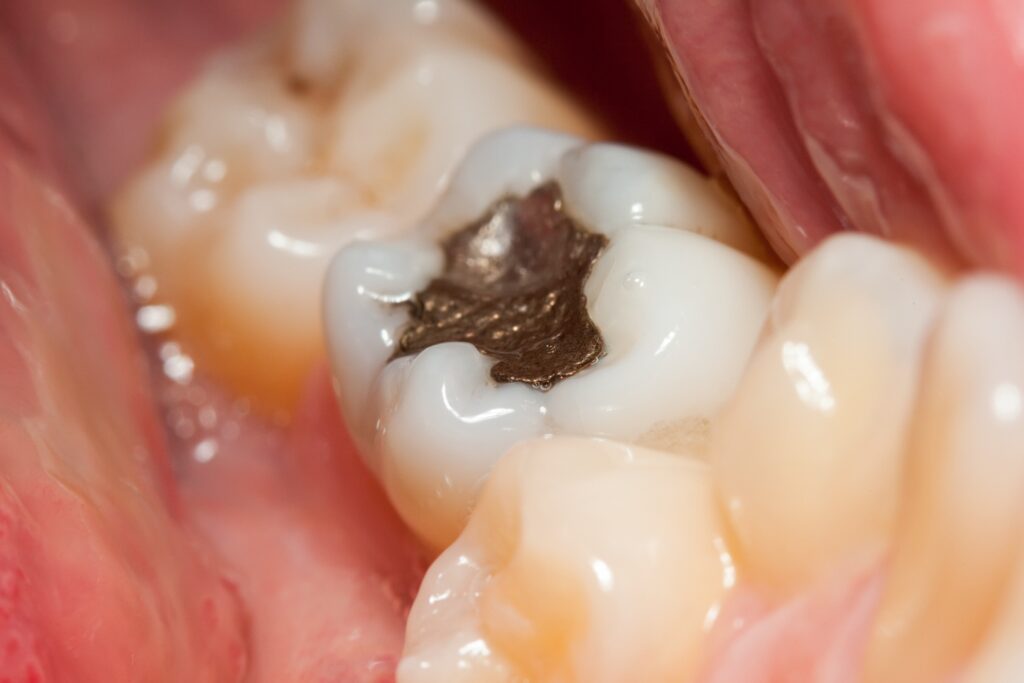
Many people assume that once a tooth has been treated with a filling, the problem is permanently solved. While fillings are durable and effective, they do not make a tooth immune to future decay. In fact, one of the more common restorative issues dentists see is a cavity forming underneath or around an existing filling.
At California Dental Group, we often detect what’s called recurrent decay — new decay that develops at the edges of an old restoration. Because it’s hidden beneath the surface, patients are frequently surprised to learn it’s there.
How Can Decay Form Under a Filling?
A filling seals the area where decay was removed. Over time, however, several factors can compromise that seal.
Wear and Tear Over Time
Fillings endure constant pressure from chewing. As years pass, they can wear down, crack, or develop tiny gaps along their edges. Even microscopic openings allow bacteria to enter and begin breaking down tooth structure again.
Normal Expansion and Contraction
Teeth naturally expand and contract with temperature changes. Hot coffee followed by ice water creates repeated stress on both the tooth and the filling material. This movement can gradually weaken the bond between the two.
Plaque Accumulation at the Margins
The “margin” is where the filling meets the natural tooth. If plaque consistently builds up along that edge, decay can develop at the seam and spread underneath the restoration.
Older Materials
Some older filling materials, particularly certain metal restorations, may last many years but are more prone to leakage over time compared to modern bonding techniques.
Signs of a Cavity Under a Filling
Recurrent decay often develops quietly. Many patients feel no symptoms in the early stages. However, possible warning signs include:
- Sensitivity to cold or sweets
- Pain when biting down
- A rough or uneven feeling around the filling
- Darkening near the edges of the restoration
- Food frequently getting stuck in the same area
Sometimes, there are no noticeable symptoms at all. That’s why routine exams and digital X-rays are essential.
How Dentists Detect Hidden Decay
At California Dental Group, detecting decay under a filling requires careful evaluation. Your dentist may:
- Examine the margins of the filling visually
- Use a dental instrument to check for softness or gaps
- Take digital X-rays to see beneath the surface
- Compare current images to previous ones to look for changes
On X-rays, recurrent decay often appears as a darker area beneath or alongside the existing restoration.
What Happens If It’s Left Untreated?
If decay under a filling progresses, it can weaken the remaining tooth structure. Eventually, the tooth may crack or the decay may reach the inner pulp where the nerve is located.
At that point, treatment becomes more complex. Instead of simply replacing a filling, a patient may require:
- A larger filling
- A dental crown
- Root canal therapy if the nerve becomes infected
Addressing the issue early typically allows for more conservative treatment.
Treatment for Recurrent Decay
The most common solution is removing the old filling, cleaning out the new decay, and placing a new restoration. If the remaining tooth structure is strong, a new filling may be sufficient.
If a significant portion of the tooth has been compromised, a crown may be recommended to restore strength and prevent fracture.
The exact treatment depends on how much healthy tooth remains.
How to Reduce the Risk
While no filling lasts forever, you can extend the lifespan of your restorations by:
- Brushing and flossing consistently
- Avoiding frequent snacking on sugary foods
- Wearing a night guard if you grind your teeth
- Attending regular dental exams and cleanings
Early detection is the key to preventing minor issues from becoming major repairs.
If you have older fillings or have noticed new sensitivity in a previously treated tooth, schedule an evaluation at California Dental Group. Call 800-407-0161 to book an appointment and ensure your restorations are still protecting your smile the way they should.
